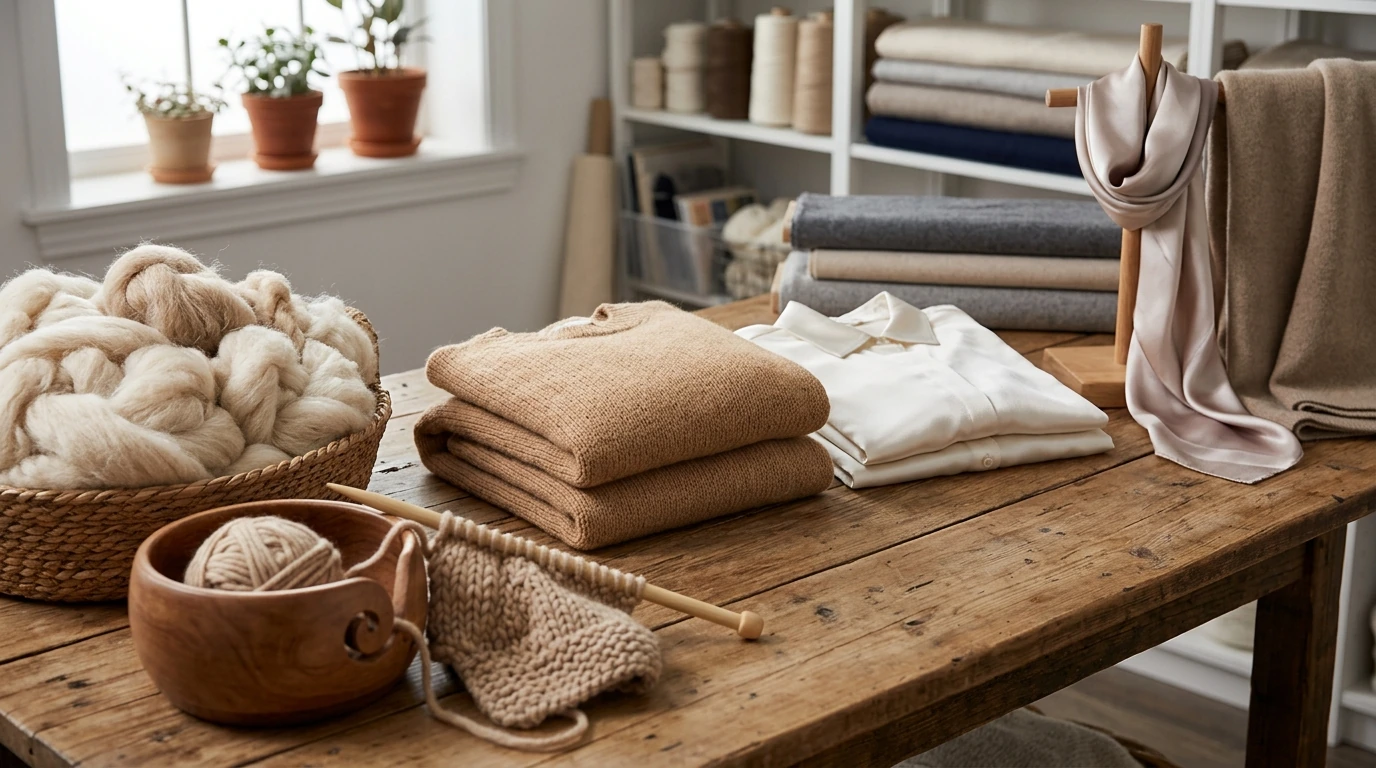
Cashmere is typically warmer than silk. Cashmere fibers are naturally crimped and lofty, which helps them trap more insulating air close to the body. Silk can feel cozy and comfortable, but it’s generally better at temperature regulation than deep insulation—meaning it can help smooth out chill without providing the same “heat-holding” power as cashmere.
Cashmere comes from the soft undercoat of cashmere goats and is prized for warmth without bulk. The fiber structure creates small air pockets that slow heat loss, so even lighter-weight cashmere can feel surprisingly warm. In sweaters, scarves, hats, and socks, cashmere tends to deliver that immediate, winter-ready warmth people expect.
Silk shines as a breathable, skin-friendly layer that’s excellent for layering and for people who overheat easily. A silk base layer can add noticeable comfort under a sweater or coat by reducing drafts and helping manage moisture. On its own, though, a thin silk blouse or camisole won’t insulate like a comparable cashmere knit.
Not all cashmere is equally warm, and not all silk is equally light. Thickness (GSM), knit vs. weave, and how tightly the fabric is constructed can make a big difference. A dense cashmere knit will outperform a sheer silk weave in cold weather, while a heavier silk (like some satins or twills) can feel warmer than a very fine, airy cashmere blend.
If the priority is maximum warmth in a single layer, choose cashmere. If the goal is a sleek, comfortable layer that helps you stay comfortable across changing temperatures, silk is a smart pick—especially under cashmere. For a deeper comparison and practical outfit ideas, visit the full guide on cashmere vs. silk warmth.
Yes. Silk works well as a thin base layer because it’s breathable, comfortable against skin, and helps reduce the chill under heavier layers without adding bulk.












Leave a comment